
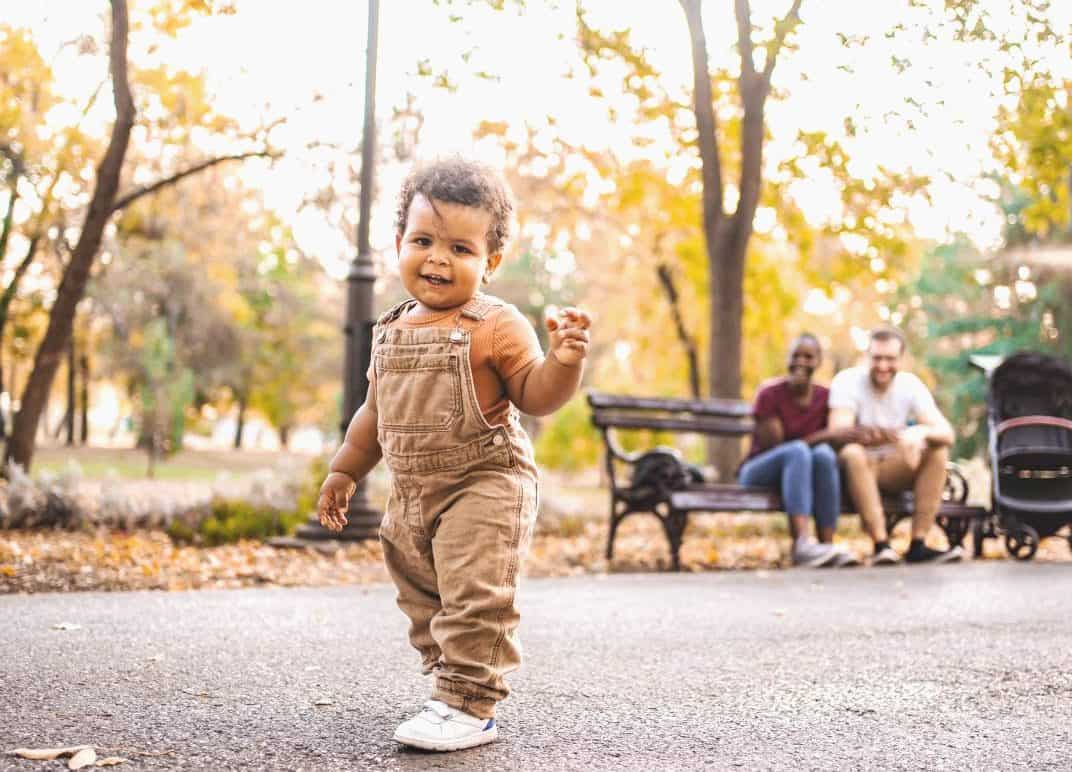
There is a particular kind of hope in loading a toddler and a camera into the car and heading to the park. You want the laugh, the sprint across the grass, the light in the hair. What you usually come home with is forty blurry frames and one where they are looking at a dog. The gap between those two outcomes is not talent, it is a handful of practical calls about light, shutter speed, and letting a two-year-old be a two-year-old.
Reading the Light Before You Lift the Camera
Why Midday Sun Is Your Enemy
Here is the thing nobody tells you when you take a toddler and a camera to the park at eleven in the morning: the light is working against you. New Zealand sits under a thin ozone layer and our summer sun is genuinely brutal, which is lovely for the tan you did not want and terrible for a photo.
Overhead sun casts hard shadows straight down. You get raccoon eyes, a shiny forehead, and a squint every time your kid looks anywhere near you. No amount of clever editing fully fixes a face carved up by midday shadow.
If midday is the only window you have, that is fine, we work with it. But the first move is always the same: get out of the direct sun. Everything after that gets easier.
Finding Shade That Still Glows
Open shade is the toddler photographer’s best friend. That means shade with an open sky in front of it, not a dark cave under dense bush. The edge of a stand of trees, the shadow side of a house, a park verandah, the covered end of a playground, all of these throw soft, even light onto a small face.
The trick is where you point them. Have your toddler stand in the shade but facing out toward the bright, open area. That open sky becomes a giant soft light, filling the eyes with a gentle catchlight and smoothing out every lump and bump.
Watch for dappled shade, though. Light filtering through leaves looks pretty to your eye but lands on the skin as messy blotches of bright and dark. Move a metre or two until the light on the face is clean and even. That one metre is often the difference between a keeper and a delete.
The Golden Hour Is Worth the Wrangle
The hour or so after sunrise and before sunset is called the golden hour for good reason. The sun sits low, the light turns warm, and shadows stretch long and soft. In an Otago autumn that window can be a solid ninety minutes; in a Northland midsummer it slams shut fast, so check the time and be ready.
My favourite move is to put the sun behind the child and shoot into it, which is called backlighting. You get a halo of light in the hair and a soft, glowing edge that makes even a grumpy toddler look like a small saint. Meter for the face, not the bright background, or you will end up with a lovely silhouette and no child.
Yes, golden hour clashes horribly with dinner and bedtime. Do it anyway, once. When you see what that light does, the wrangle stops feeling like a sacrifice.
Shutter Speed and the Moving Toddler
Fast Enough to Freeze a Sprint
Toddlers do not walk anywhere. They lurch, bolt, and pivot on a coin, usually the instant you lift the camera. To freeze that motion cleanly you need a fast shutter speed, and this is the single setting that turns blurry frustration into sharp keepers.
For a child running flat out across the grass, aim for 1/1000 of a second or faster. Walking or wobbling toddling is more forgiving, and you can drop to around 1/500. Anything slower than 1/250 and a fast-moving kid turns to mush. A quick primer on how shutter speed controls motion blur is worth a read if the numbers feel abstract.
To get those speeds outdoors, switch to shutter priority mode (S or Tv on the dial), set your shutter speed, and let the camera sort out the rest. Nudge your ISO up if the shot comes out dark. A little grain beats a blurry memory every time.
Let the Camera Do the Chasing
Sharp focus on a moving target is the other half of the battle, and single-shot autofocus will let you down constantly. It locks once, the toddler moves, and the focus stays behind. Switch to continuous autofocus instead, marked AF-C on Nikon and Sony or AI Servo on Canon. It tracks the subject and keeps adjusting as they charge toward you.
Then hold the shutter down and let it rip. Burst mode, or continuous drive, fires a rapid run of frames instead of one. Out of a burst of eight, one will have both feet off the ground, the grin at its widest, and the eyes open. That is the frame you keep.
It feels wasteful, machine-gunning a two-year-old on a swing. It is not. You are buying yourself the one perfect moment inside a second of chaos, and with a toddler, a second is all you get.
Play Beats Posing Every Time
Give Them a Job, Not a Pose
Ask a toddler to smile and you get a rictus. Ask them to sit still and look at the camera and you get a meltdown, or worse, that dead-eyed obedience that makes a photo look like a hostage proof-of-life. Posing and toddlers do not mix.
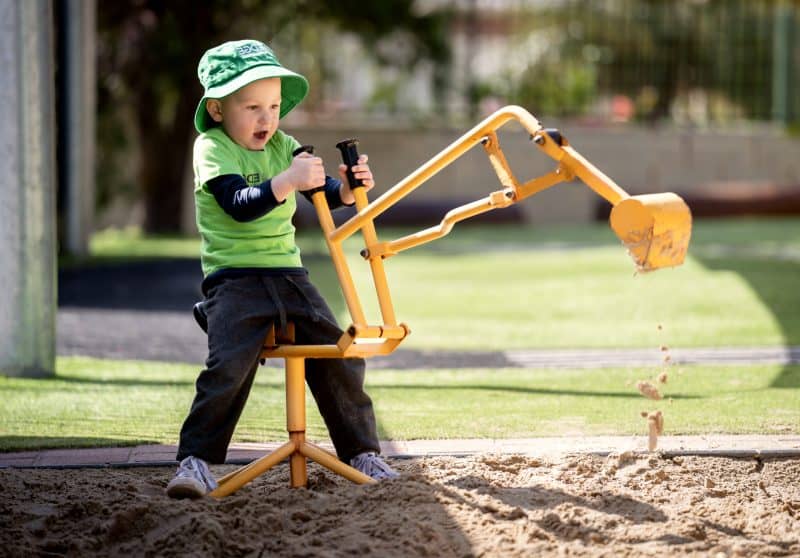
Give them a job instead. Count the daisies, find a red leaf, throw the ball to Dad, jump off that low step, blow the dandelion. A task pulls their focus off you and the camera, and the moment they forget you are there, the real expressions arrive. You are not directing a portrait, you are documenting a small person being busy.
The best frames come sideways. You set up the job, you wait, and you catch the concentration, the triumph, the belly laugh. None of it was posed, all of it is real, and that is exactly why it works.
Get Down to Their Level
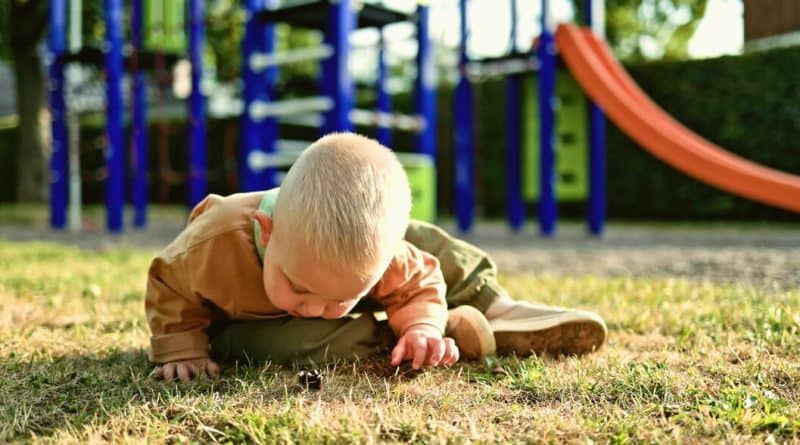
Most parent photos of toddlers are taken from the parent’s standing height, looking down at the top of a head. It reads as an adult looming over a child, and it flattens them into the grass. The single easiest fix in child photography costs nothing: get down.
Drop to their eye level. Kneel, crouch, sit on the wet grass, lie flat on the beach if you have to. Suddenly you are in their world, seeing what they see, and the photo carries the intimacy of a proper portrait rather than a surveillance snap.
Going even lower, shooting slightly up at them, makes a toddler look heroic against the sky and turns a messy park background into clean blue. Your knees will hate you and your jeans will be soaked. The photos will be worth both.
Bring the Bubbles and the Bribes
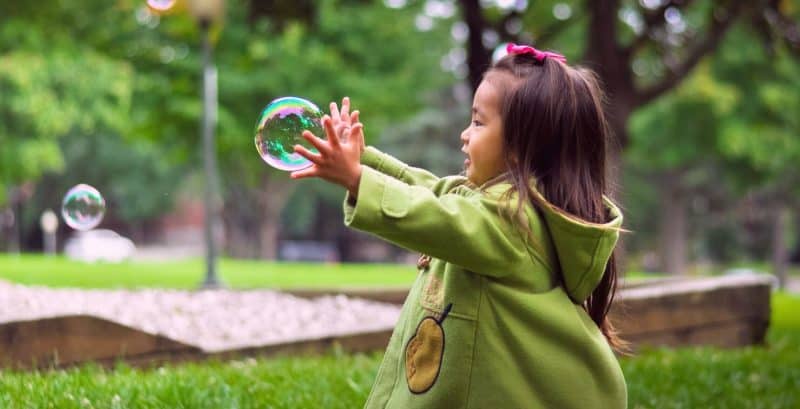
A bottle of bubbles is the most reliable prop in the bag. Blow them and any toddler forgets the camera exists, chasing and popping and shrieking with genuine delight. You get movement, expression, and something for their hands to do, all from a two-dollar tube.
Snacks are the honest currency of a toddler shoot. A pottle of blueberries or a few rice crackers buys you five more minutes of cooperation when the wheels start to come off, and nobody has ever regretted bringing them. Same goes for a favourite toy, a familiar blanket, anything that says this is fine, this is fun.
Keep the props doing a job, not cluttering the frame. The bubbles, the ball, the snack are there to spark a real reaction, not to star in the photo. Once the reaction happens, the prop can quietly leave the frame while the moment stays.
Keeping It Safe, Calm and Short
One Adult on the Camera, One on the Kid
If you can bring a second adult, do. One person runs the camera and stays behind the lens, thinking about light and focus and the moment. The other stays right beside the toddler, ready to catch a stumble, steer them away from the pond, or scoop them up the second play tips into tears.
This matters most near water. A NZ beach or a park duck pond is a magnet for toddlers and they have no fear at all, so someone whose only job is watching the child, not the frame, is not optional. The camera can wait; a toddler near open water cannot.
Solo is doable, plenty of us shoot our own kids alone all the time. You just accept you will get fewer frames, because half your attention is rightly on keeping a small human safe. That is the correct trade, every time.
Quit While Everyone Is Still Smiling
A toddler photo session has a shelf life measured in minutes, not hours. The good stuff, the real laughs and the easy movement, usually lands in the first fifteen or twenty minutes. After that you are borrowing against patience you do not have, and it shows in every frame.
Learn to read the early warning signs. The rubbing of eyes, the whinge that was not there before, the sudden refusal to do the thing they loved two minutes ago. That is your cue to fire off a last few frames and call it. Push past it and you get tears, and nobody keeps the crying photos.
The best sessions end while everyone still thinks it was fun. Your toddler remembers the park as a good time rather than a chore, which makes the next shoot easier, and you go home with twenty honest frames instead of two hundred desperate ones. Short and sweet wins.
None of this is about controlling a toddler, which is a fool’s errand anyway. It is about setting up the conditions where a good photo can happen and then being ready when it does. Get the light soft, get the shutter fast, give them a job, and get out of their way. The keepers were always going to be the ones where you let them forget the camera was there.
Comments
Quick question on the shutter speed bit. If I bump the shutter to 1/1000 in the shade my photos come out dark even with ISO up. Am I better dragging it back down or just accepting the grain? Never sure where the line is.
Grain beats blur, no contest. I shot my daughter at ISO 3200 on the swings at golden hour and yeah it is a bit noisy up close, but she is pin sharp mid-air with the sun in her hair. That is the one on the wall now.
Bubbles. Every single time. Cannot believe how long it took me to work that one out.
Good article but I reckon fifteen minutes is generous for some kids. Mine gives me about six good minutes and then he is done, full stop. Might be worth saying the window is even shorter for the younger ones, otherwise people push it and get the meltdown you warned about.
The open shade tip is gold. I always parked my two in a shady spot but had them facing INTO the tree line, so their eyes went flat and dark. Turned them around to face the open grass last weekend and the difference is honestly ridiculous.